General
Set up and configuration
- Assign required reading
- Manage app settings and notifications
- Home page image and document logo
- Manage categories
- Welcome text and news
- Hide items (archive content)
- Required reading reports
- Updating role name video
- Updating links to Strengthened Standards training video
- Onboarding kit
- Send email notifications
Manage users
Troubleshooting
Registers
Manage content
- Delete document
- Edit, review and approve process
- Edit, review and approve policy
- Create and publish new policy
- Create and publish new process
- Previous item version information
- Edit roles
- Edit release notes
- Hide items (archive content)
- Introduction to release management
- Manage document
- Manage regulations
- Publish multiple changes (in one release)
- Publish single item (manage changes)
- Download and print content
- Delete role
- Delete policy
- Delete process
- Delete or archive regulation
- Embed video
- Manage comments
- Send email notifications
- Show Remaining Articles (2) Collapse Articles
Audits
Training Resources
- Content updates training
- Process editing - editing the process sequence
- Upcoming training sessions
- Required reading training video
- Updating role name video
- Updating links to Strengthened Standards training video
- Scheduling updated audits video
- Work instructions training video
- Comments training video
Business units
Reports
Required Reading
Work Instructions
Mobile Phone App
Comments
Custom audits
Create and publish new policy
QMS users with the appropriate level access can create new policies within the QMS for organisational use. Access levels to allow creation of new Policies are:
- Administration
- Model administration
- Policy editing
Tip
We recommend carefully checking the content pre-loaded into your QMS prior to creating a new policy to ensure that information is not duplicated and/or contradictory. If a content item (e.g. Policy or Process) already exists on the same topic, you might consider updating the existing item instead. If you would prefer to create a new Policy, make sure you archive the existing one. Refer to Hide Items page for more information.
Add new policy
Step 1
Access the Policies tab and click Add New Policy. The release management workflow appears. Click OK to start editing.

Step 2
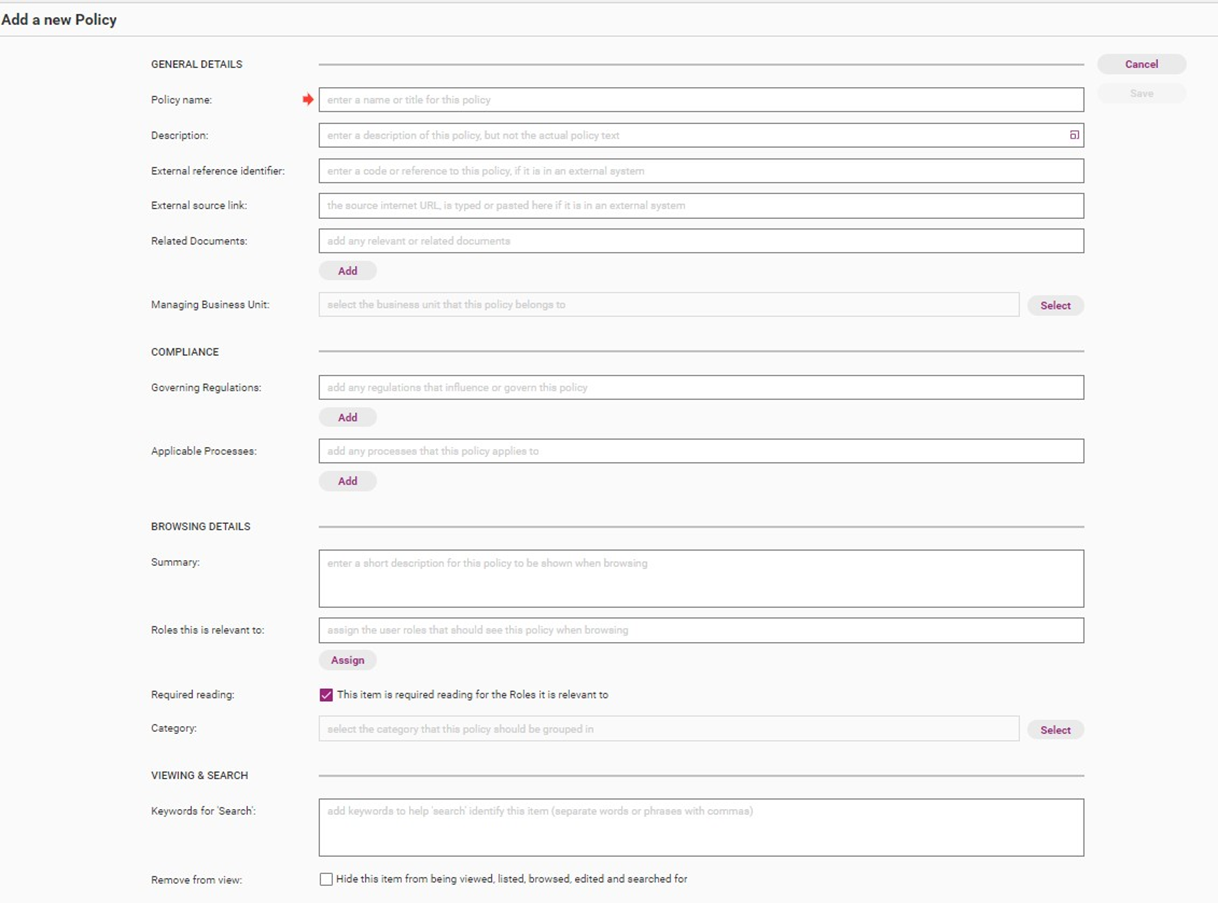
A draft version of the new policy will be created with the first view that appears corresponding to the Overview section of the Policy. Complete all the relevant sections in the overview. The table below provides a summary of each section.
Field | Description |
|---|---|
Policy name | This is shown as the title of the policy. This is the only compulsory section of the Overview. |
Description | Overview of the policy such as background and/or purpose. It may be helpful to include key definitions and/or applicability information in this section. |
External reference identifier | An identification code/number for the item. This can be used if the item is being migrated from a different system or if a system of identifiers is required. This field is optional. |
External source link | Link to relevant external documentation. |
Related documents | Documents that are related to the policy (note the Documents must already be loaded into the QMS. Refer to Manage Documents page for more information) |
Managing Business Unit | The Business Unit that manages this piece of content (applies only if you have Business Units implemented and wish to have visibility of the Policy restricted to users affiliated with the Business Unit) |
Governing regulations | Regulations related to the policy (note the Regulations must already be loaded into the QMS. Refer to Manage Regulations page for more information) |
Applicable processes | Processes governed by the policy. |
Summary | A short description of the policy that appears in the Browse subtab. |
Roles this is relevant to | The work roles and people to which the policy is related (e.g. Support Worker) (note this only needs to be updated if you intend to set the Policy as required reading for those roles. Refer to Assign Required Reading page for more information) |
Category | The relevant policy group. (note the QMS content is loaded to be categorised according the Aged Care Quality Standards, ARVAS standards and/or NDIS Standards. Refer to Manage Categories page for more information) |
Required reading (for customers with Attestation only) | Tick this box to make this item required reading for all roles to which the item is relevant. |
Keywords for 'Search' | Keywords that, when searched in the QMS, will make the item come up in search results (note all text within the body of the Policy will be searched through as part of the search function so this section can be used to include abbreviations or other terms which are not found in the Policy itself) |
Remove from view | Tick the box to hide the item. This will make the item only visible to users with Administrator permissions. Hidden items are:
Refer to Hide Items for more information. |
Tip
You can format the text, add images, special characters, external links, and link items from QMS. See section “Editing Tools” at the end of article.
Tip
If you assign a role to a policy, only users that have been assigned this role in the web app will be able to see it in the Browse menu. All other users can still see it in the list view.
Step 3
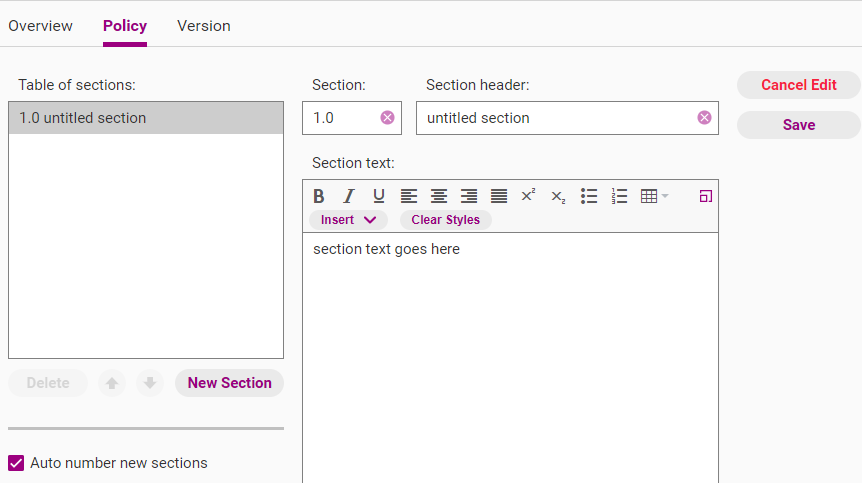
Add content to your policy by creating and writing policy sections. You can edit the section number, title and order.
Tip
If you wish to structure your Policy similarly to the pre-loaded QMS content, you could use these subsections:
- Policy Principles
- Policy Commitment
- Roles and Responsibilities
- Suggested Evidence
- References
Step 4
When you have finished editing click Save to commit the changes and click Send for review.

Step 5
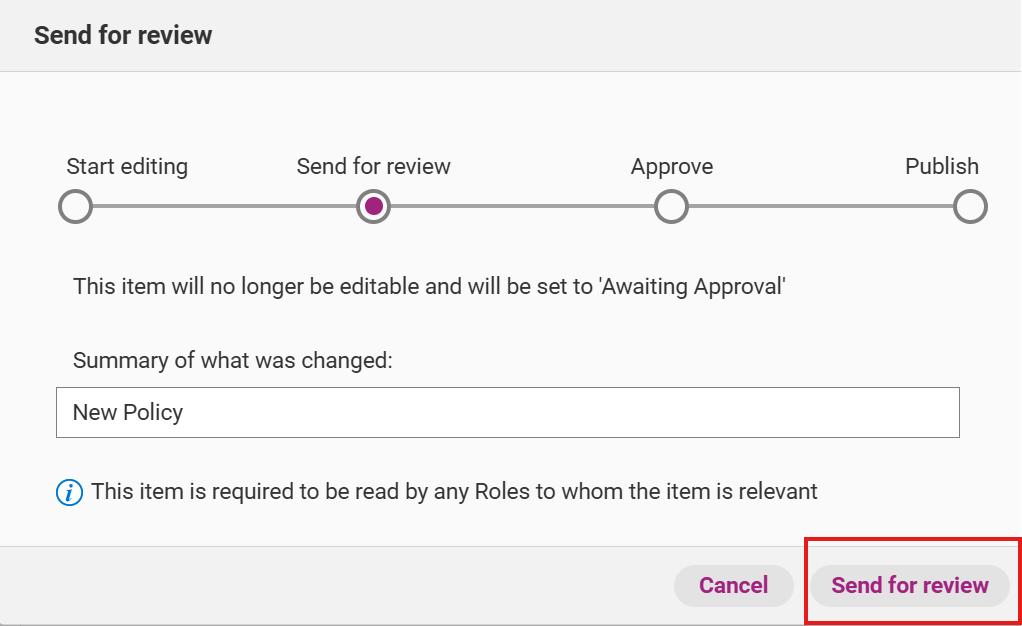
A release management workflow appears. Write a summary of what you added to the policy and click Send for review to move to the approval stage.
Important
Draft content items are only visible to administrators and editors. The new policy must be approved and published for it to be visible to other Users of your QMS.
Approve and publish new policy
QMS Users with Administration or Model Administration level access are able to approve and publish draft policies.
Step 1
Open the policy you wish to approve. Click Approval in the top right-hand corner of the policy. A dropdown menu appears. You can approve the policy or you can revert it to draft if you want to make further changes to your content.

Step 2
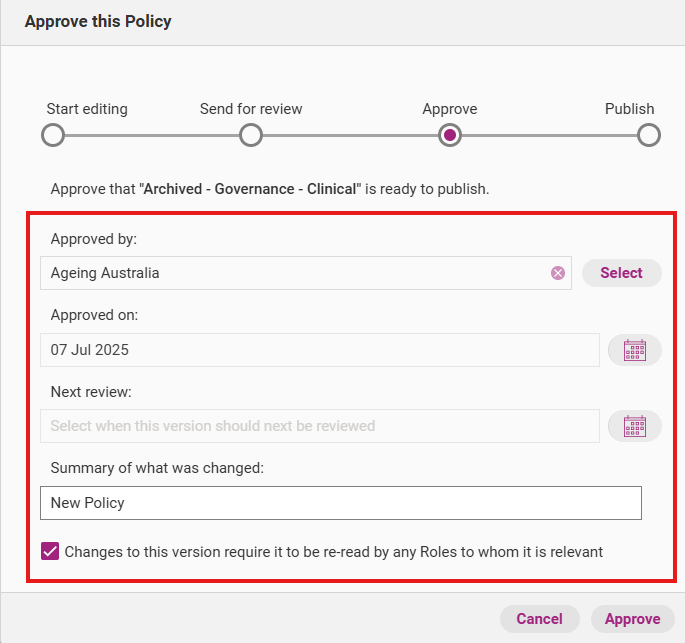
In the Approve stage, you can edit the summary of what additions and/or changes have been made. You also have the option to select who approved the item, the date on which it was approved as well as the next internal review date. Click Approve to continue to the publication stage
Tip
As with other aspects of web app content, you can edit version control information for policies, processes and documents using the Version subtab. See guide Edit, Review and Approve Policy for more information.
Tip
If the new policy is part of a larger release (i.e. a release with multiple content updates), leave it marked ‘Ready to Publish’. When you are ready, you can publish it at the same time as your other content updates by accessing the Home tab and clicking Manage Changes.
See guide Publish Multiple Changes (in One Release) for more information.
Step 3
Once approved, the policy is marked ‘Ready to Publish’.
To proceed with publication, click Publishing and Publish Immediately. Again, there is the option to Revert to Draft if additional changes are needed.

Step 4
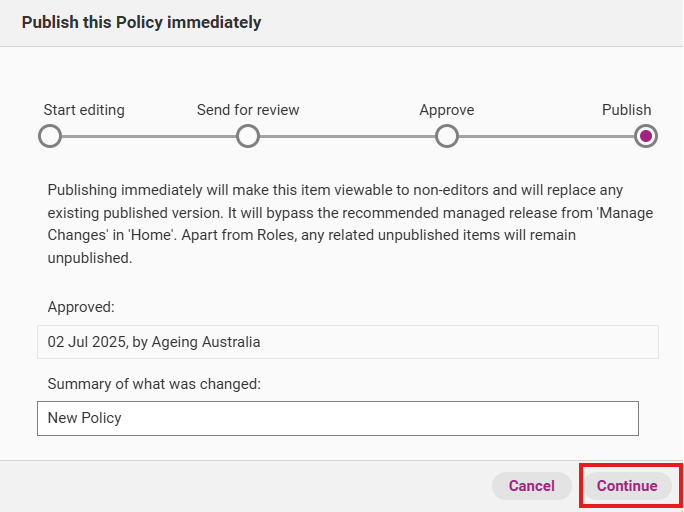
When you confirm publication, the release management workflow appears. You have the option to edit the summary of the changes that have been made. Click Continue.
Step 5
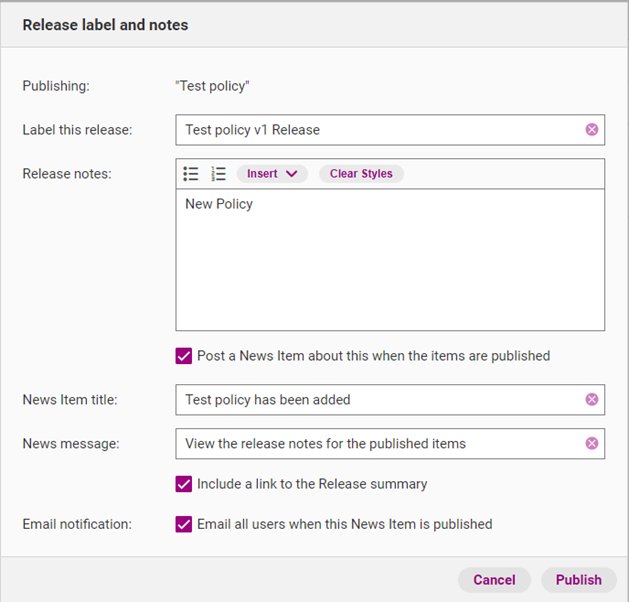
The release label and notes window appears. Write official release notes for the new policy. The table below shows a summary of each section.
Tip
You can edit the release notes later if required, by finding and editing the release within Publication History.
Field | Description |
|---|---|
Label this release | The official name of this release. |
Release notes | Details about what updates were made. |
Post a news item about this when the items are published | If selected, you can post a news item on the Home tab to notify users about your content changes. |
News item title | Title of the news item that will appear in the Home tab. |
News message | The message that appears under the news item title. |
Include link in release summary | If selected, this option will allow you to include a link to the release notes for the item. |
Email all users when this News Item is published | If selected, all QMS users in your organisation (provided they have activated their account) will receive an email notification about the release at 5:30am AEDT/AEST the following day. |
Step 10
Click Publish to officially release the new policy. It will now be visible to all QMS users in your organisation.
Editing Tools
You can format the text by using following options.
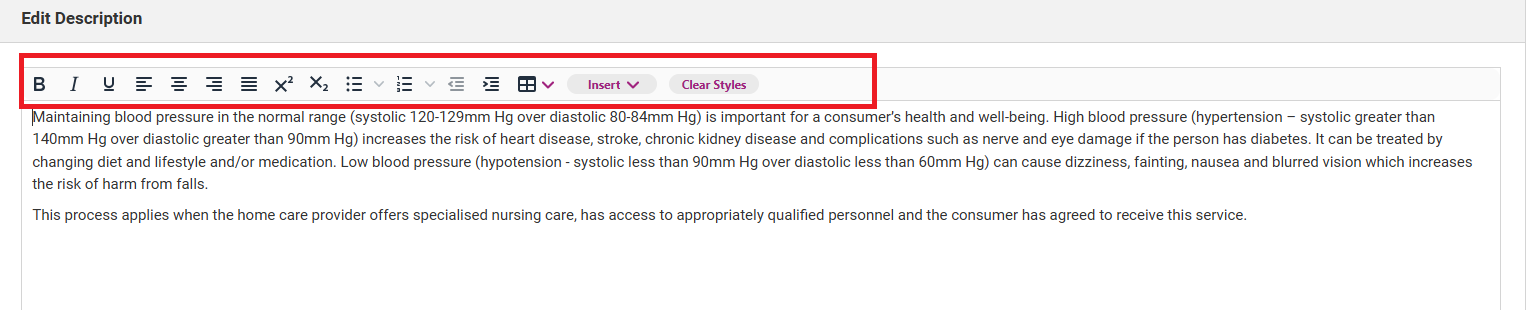
When you click on Insert. It gives you different options to add.
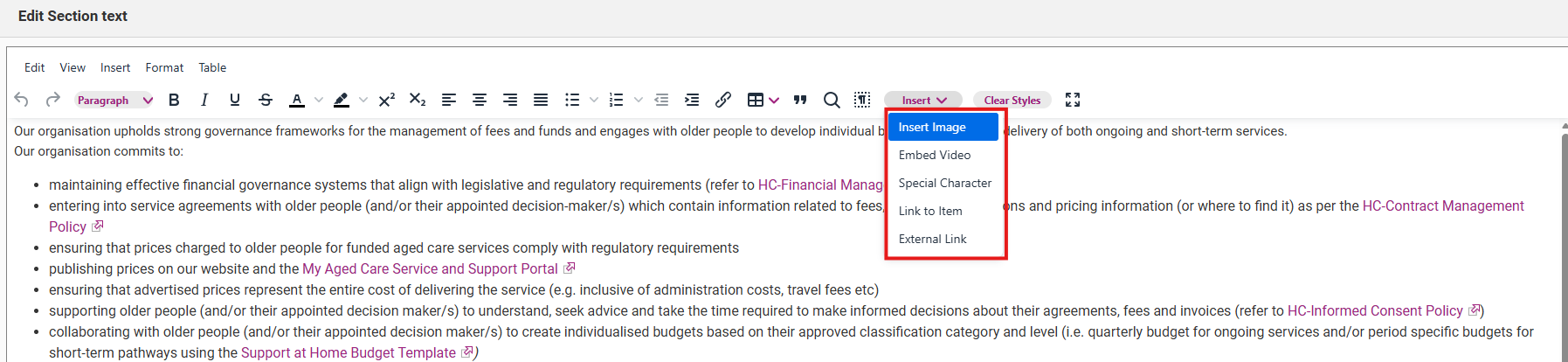
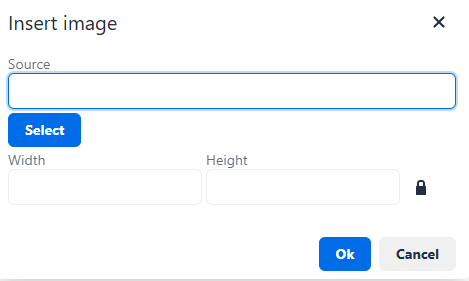
Insert Image
You can add an image from your device.
Embed Video
Videos can be embedded into any content overview or section within QMS. Refer to this user guide Embed video.
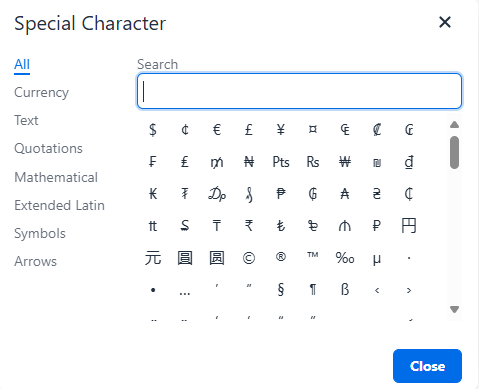
Insert Special characters
You can add any special character.
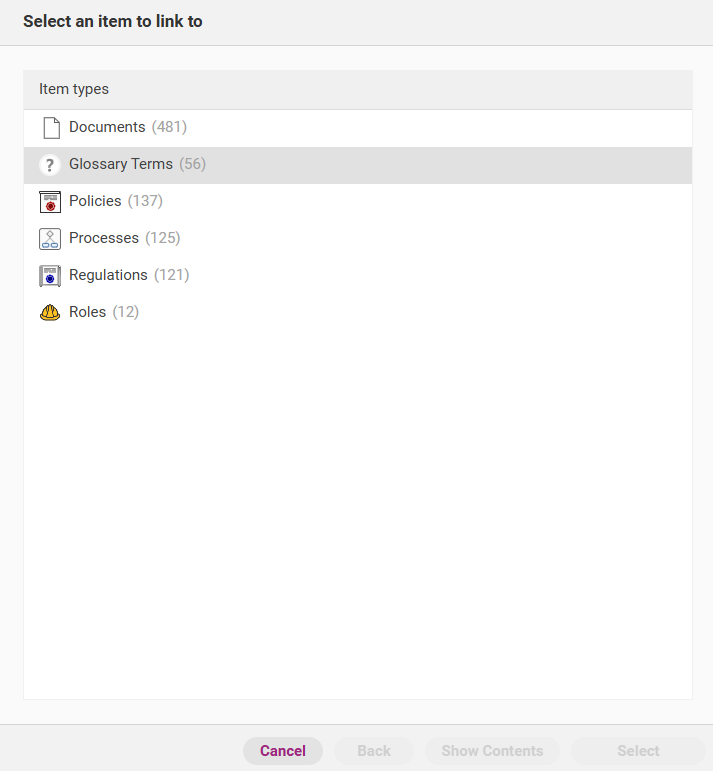
Link to Item
You can add any item (document, policy, process) from the QMS
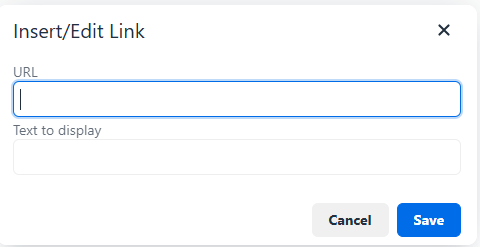
External Link
You can add any other external reference link.