General
Set up and configuration
- Assign required reading
- Manage app settings and notifications
- Home page image and document logo
- Manage categories
- Welcome text and news
- Hide items (archive content)
- Required reading reports
- Updating role name video
- Updating links to Strengthened Standards training video
- Onboarding kit
- Send email notifications
Manage users
Troubleshooting
Registers
Manage content
- Delete document
- Edit, review and approve process
- Edit, review and approve policy
- Create and publish new policy
- Create and publish new process
- Previous item version information
- Edit roles
- Edit release notes
- Hide items (archive content)
- Introduction to release management
- Manage document
- Manage regulations
- Publish multiple changes (in one release)
- Publish single item (manage changes)
- Download and print content
- Delete role
- Delete policy
- Delete process
- Delete or archive regulation
- Embed video
- Manage comments
- Send email notifications
- Show Remaining Articles (2) Collapse Articles
Audits
Training Resources
- Content updates training
- Process editing - editing the process sequence
- Upcoming training sessions
- Required reading training video
- Updating role name video
- Updating links to Strengthened Standards training video
- Scheduling updated audits video
- Work instructions training video
- Comments training video
Business units
Reports
Required Reading
Work Instructions
Mobile Phone App
Comments
Custom audits
Report and manage incidents
Incident management features within the QMS allow Users to report incidents and give managers the ability to review, track and close incidents using the incident register.
Important
Although any user can report incidents, only users that are allocated Incident and Improvement Manager OR Administrator/Model Administrator permissions can view, edit and/or delete incidents. Permissions can be changed by going to People > Users. For more information, please see Manage Users.
For the purposes of this article:
- ‘Employees’ are users with ‘Process Viewer’ permission.
- ‘Managers’ are users with ‘Incident and Improvement Manager’ permission.
The steps built into incident reporting and management are as follows:
- Employees will report an incident using a standard incident report form.
- Once submitted, the form will be saved in the incident register and managers will receive a notification email.
- Managers can then open the incident within the incident register and review or update the details provided by the employee.
- Managers then update the appropriate fields in the Actions section of the form to track the progress of the incident and close the incident.
- If required, incident register data is exported to Microsoft Excel for further analysis and reporting.
Each step is described in more detail below.
Important
In order to report incidents, the employee must be provided a user login for the QMS.
Report Incident (employee)
The below steps show how Process Viewing level Users can use the QMS to report an Incident. Users with Incident and Improvement Manager, Model Administration and Administrator level access will also have access to additional sections and should refer to the next section Report Incident (manager).
Step 1
Access Home > Report & Improve.

Step 2
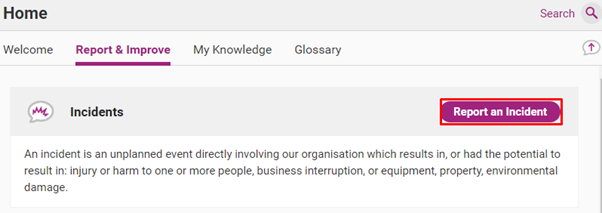
Click Report an Incident.
Step 3
Complete the incident report form. Fields marked with a red arrow are required. All other fields are optional.
Tip
If your QMS uses business units to classify incidents, add the relevant business unit in the Applied to Business Unit field.
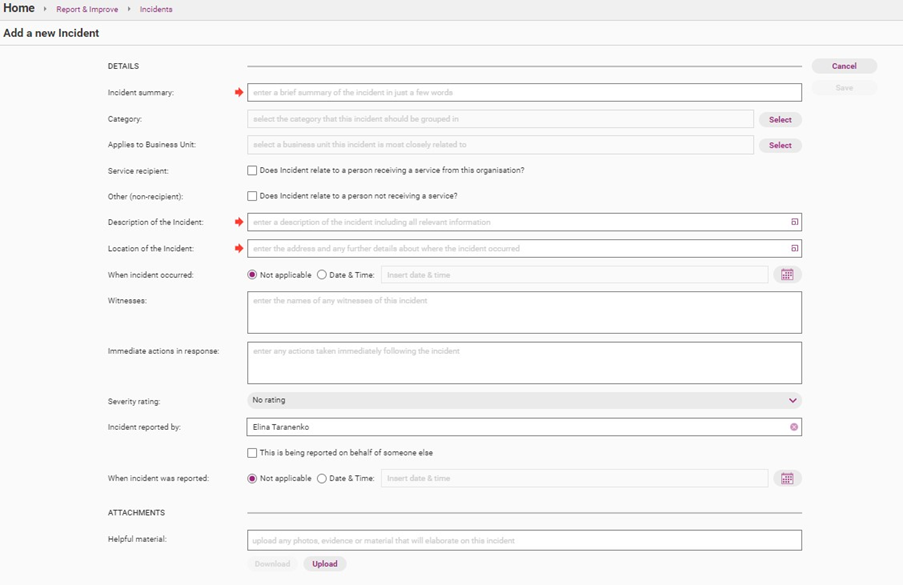
| Field | Description |
| Incident summary | A brief overview of the incident. |
| Category | The type of incident. See list below for available categories:
|
| Applies to Business Unit | The part of the business that is affected by the incident (if applicable and if Business Units implemented, see Guide new business unit set up for more information) |
| Service recipient | If the incident relates to a service recipient, tick the box in this field and enter the person’s name. |
| Other (non-recipient) | If the incident relates to a person that is not receiving services, tick the box in this field and enter the person’s name. |
| Description of the Incident | A full description of what happened. |
| Location of the incident | Specific information about where the incident occurred, such as the address. |
| When incident occurred | The date and time of the incident. |
| Witnesses | Any people that witnessed the incident |
| Immediate actions in response | Any immediate actions taken in response to the incident |
| Severity rating | The severity of the incident (from insignificant to catastrophic) |
| Incident reported by | The name of the person reporting the incident. If the incident is being reported on behalf of someone else, tick the box in this field and enter the name of the relevant person. |
| When incident was reported | A field for entering when the User completing the incident report was made aware of the incident. |
| Helpful material | Any photos, evidence or supporting materials that will help to provide further detail about the incident. |
Step 4
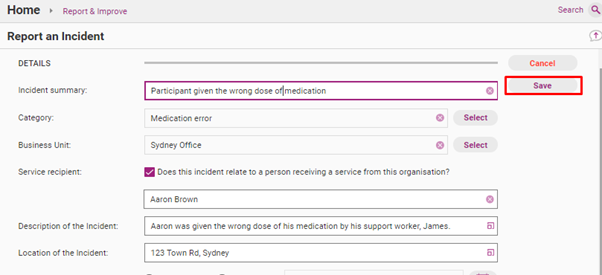
Click Save.
Review Incident (manager)
The following steps apply to Users with the following access levels:
– Incident and Improvement Manager
– Model Administrator
– Administrator
Step 1
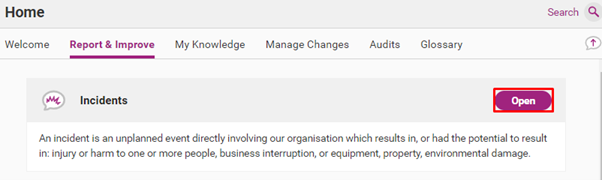
Access Home > Report & Improve.

Step 2
Click Open.
Step 3
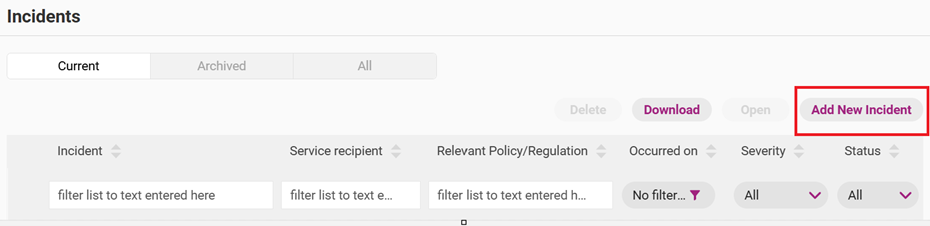
Click Add New Incident to launch the incident form.
Step 4
Complete the required fields in the Details section of the form.
Tip
If your QMS uses business units to classify incidents, add the relevant business unit in the Applied to Business Unit field and the Managing Business Units field.
Step 5
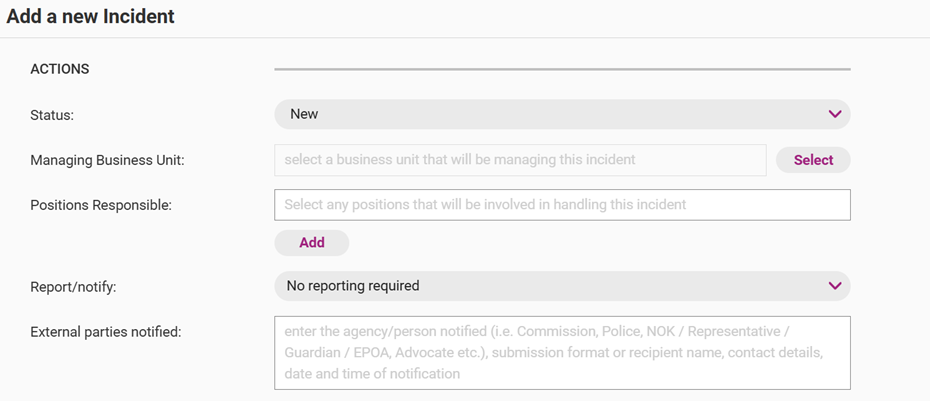
Complete additional fields in the manager’s section of the form, under Actions.
Step 7
Click Save to save the form.
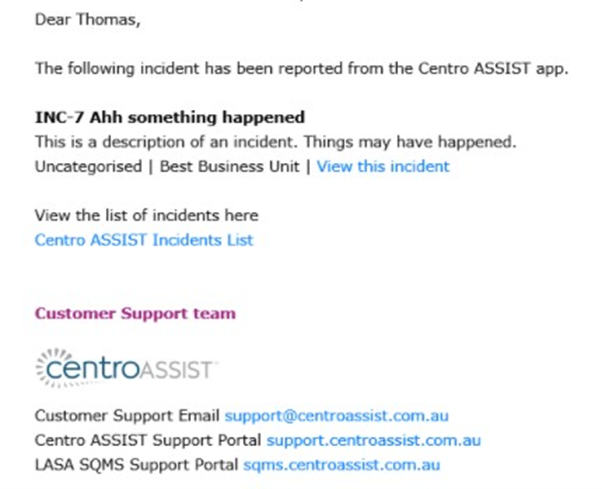
Notification Email
When an employee submits an incident, assigned users will receive a notification.
Refer to Registers Set up and Configuration page for details of how to assign users to receive notifications.
Review Incident (manager)
When an incident is reported, managers can open the incident within the incident register and review or update the details provided by the employee. The steps to do this are described below:
Step 1
Access Home > Report & Improve.
Step 2
Click Open.
Step 3
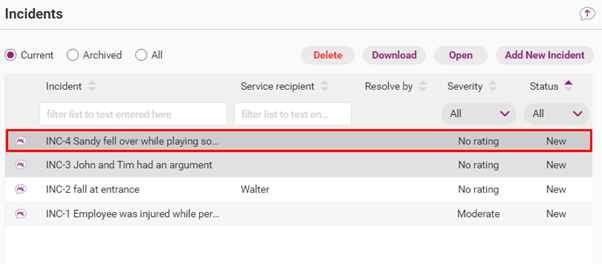
Double click the incident you want to review and update.
Step 4
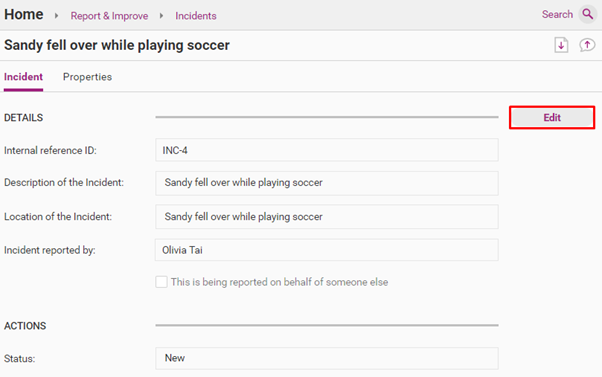
Click Edit and make all required changes to the ‘Details’ section.
Update Incident Progress (manager)
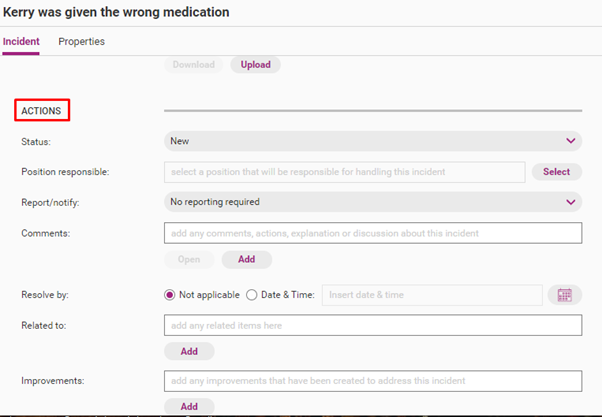
Once the initial details of the incident have been reviewed and updated, the manager can complete the Actions section in the incident report form.
Some of the fields in the Actions section appear as columns of data within the incident register, which allows the manager to track and close the incident.
Field | Description |
|---|---|
Status | The progress status of the incident. |
Position responsible | The position/role that is responsible for managing the incident (if any). |
Report/notify | The type/s of incident reporting required (i.e. External-SIRS P1, External-SIRS P2, External or Internal reporting). |
External parties notified | Information about any external parties that were notified of the incident (e.g. the police). |
Resolve by | The date by which the incident must be resolved. |
Related to | Relevant complaints, feedback and other incidents. |
Improvements | Improvements that relate to the incident or that are designed to address the incident. |
External identifier | Reference number or another external incident identifier. |
Relevant Policy/Regulation | Any policies or regulations related to the incident. |
Closing comments | Any other notes about the resolution of the incident. |
Satisfactory resolution | Field for recording whether the incident was resolved to the satisfaction of all parties. |
Return to work | Tick this box if the incident resulted in a return to work plan. |
View and use incident register
The incident register is an important tool for managers to track and close incidents. Selected incidents can be exported to Excel for further analysis and reporting as described below.
View incident register
Step 1
Use the filtering options on the ribbon above to view and search incidents.

Filter | Description |
|---|---|
Incident | Incident title. |
Category | The category of the incident. |
Service recipient | The service recipient affected by the incident. |
Relevant policy/regulation | Policy/regulations that are attached to the incident/s |
Occurred on | Date on which the incident/s occurred |
Closed on | Date on which the incident/s were closed. |
Severity | Incident severity rating. |
Status | Management status of the incident. |
In addition, you can use the options above the search ribbon to view current and archived incidents.
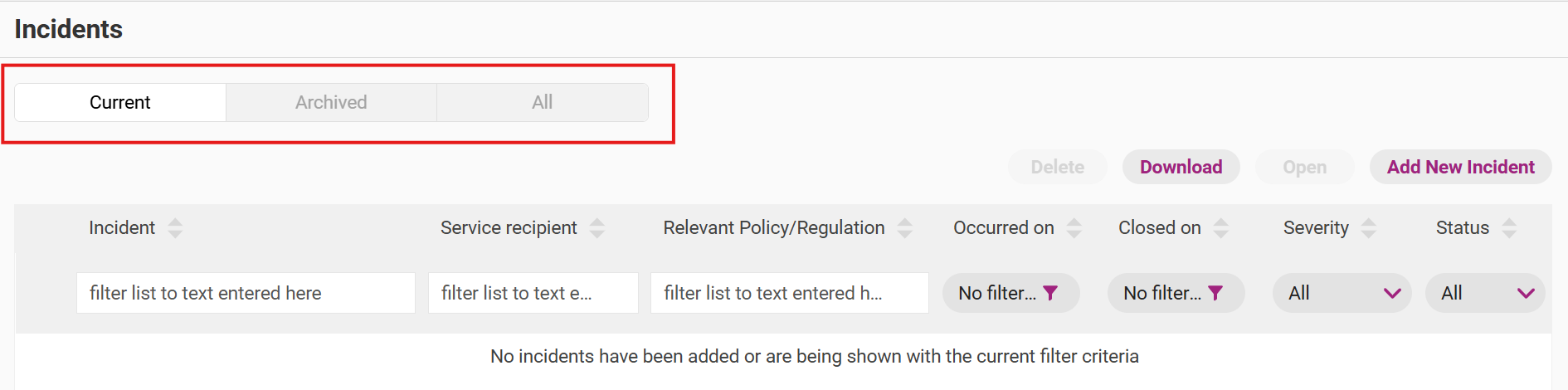
- Current view shows the incidents that are currently being managed.
- Archive view shows incidents that have a status of Completed or Cancelled.
- All shows both current and archived items.
Download incident register
All information relating to activities recorded in the incident register can be downloaded as a spreadsheet for reporting purposes.
Incidents can be downloaded individually or in bulk as either the complete register or in a group e.g. by category or business unit.
Step 1
Access Home > Report & Improve.

Step 2
Click Open.
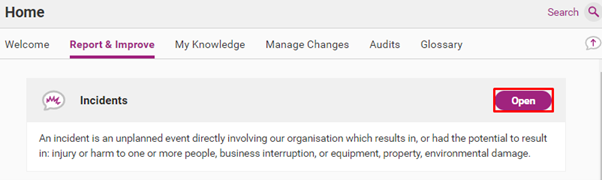
Step 3
If required, filter and select the content you want to download.
Tip
To download multiple (but not all) items, hold down Ctrl, click once on each relevant item and click Download.
For example, if you want to download incidents from a specific category, write the name of the category in the Category search bar, hold down Ctrl and select the relevant incidents.
Step 4
Click Download.
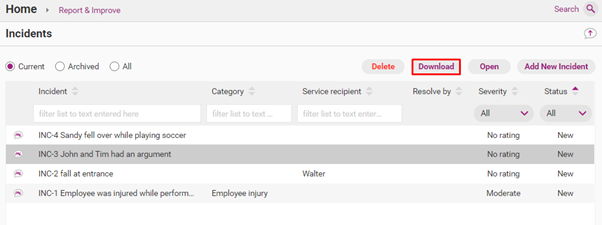
Step 5
Choose your download options. The following options are available:
- Whether you want to download all incidents or only selected incidents.
- Incidents ordered by identifier (PDF feedback report).
- Incidents with all information (Excel feedback report).
Click Download.
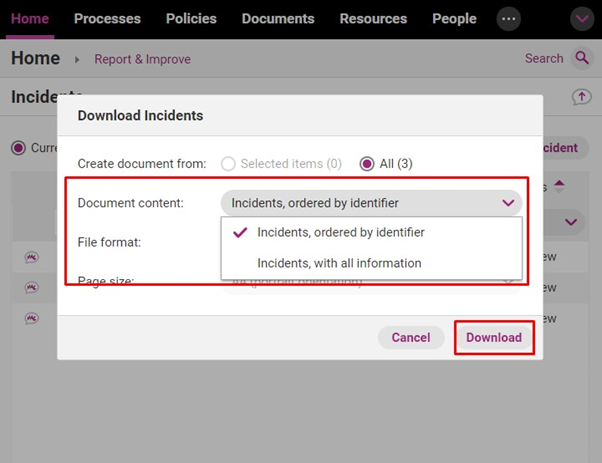
Step 6
When the data is loaded, click Open. The incident data will open in Microsoft Excel.
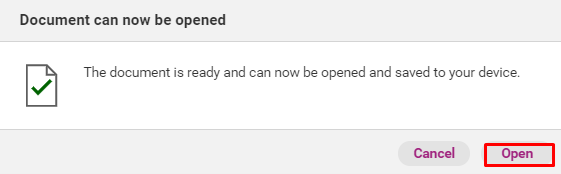
Delete Incident
Important
There is no publication history or audit trail for deleted register items. Users should ensure they have the authority to delete an incident before proceeding. We recommend instead closing the incident using the Status: Cancelled (archive) option.
Step 1
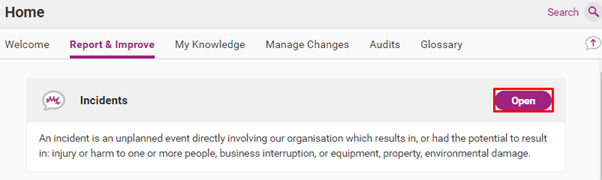
Access Home > Report & Improve.

Step 2
Click Open.
Step 3
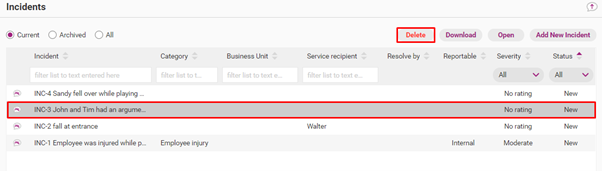
Click once on the incident you want to delete and click Delete.
Step 4
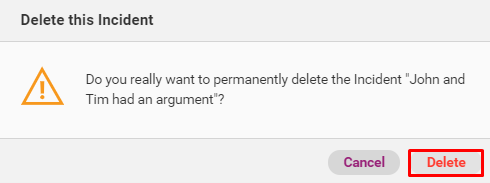
Confirm the deletion.